NZ road rules since 1 October: the 1.5m, bus and cycle-lane checks
From 1 October, drivers must leave at least 1.5 metres when passing people travelling in the same direction, give way to some buses leaving stops, and learn the new cycle-lane and footpath settings.
Written and maintained by OpenBoot Editorial. Prices and policies can change, so use the linked source notes for the latest position.
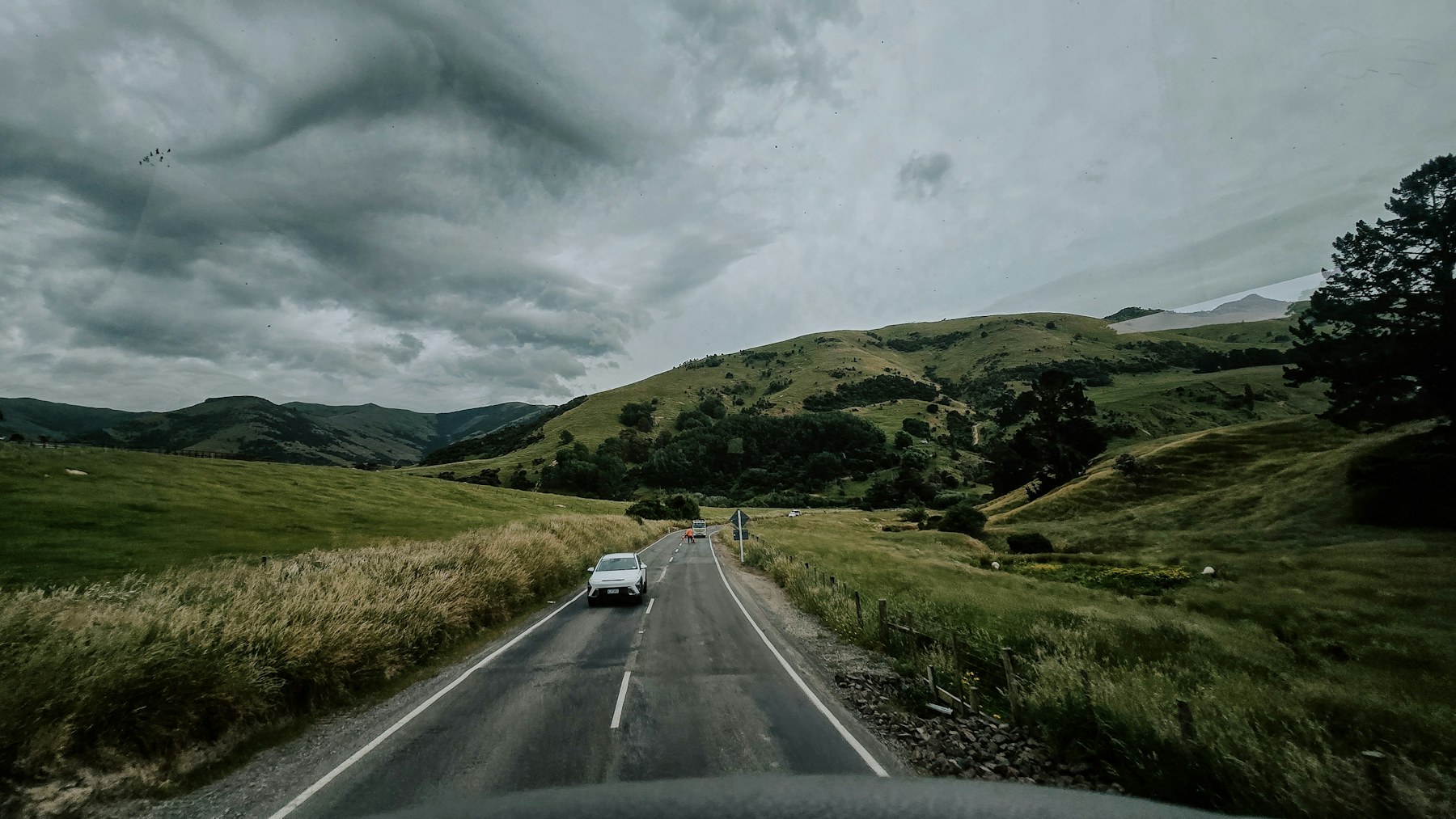
New Zealand's lane-use rules changed on 1 October 2026. The changes affect how drivers pass people travelling outside motor vehicles, how buses re-enter traffic on lower-speed roads, and where some children and e-scooter riders can travel.
The practical change for a car driver is not a new speed limit. It is a new set of space-and-priority decisions. If the road is too narrow or visibility is poor, the right answer can still be to slow down and wait.
The 1.5-metre passing rule
Since 1 October, a driver passing a person who is not driving a motor vehicle must leave at least 1.5 metres when both are travelling in the same direction in the same lane. The rule covers cyclists, people on horseback, pedestrians, and other road users who meet that description.
The distance is measured between the closest outer points of the person, animal, or vehicle being passed and the motor vehicle, including projections. A roof mirror, load, or other projection is not a reason to treat the gap casually.
This does not turn 1.5 metres into a target that makes every pass acceptable. If the lane is tight, a parked-car door could open, traffic is approaching, or the road surface is poor, slow down and wait until there is enough room to pass safely. Do not squeeze through a gap because the centre line or a following driver makes the manoeuvre feel urgent.
Buses get a clearer way back into traffic
On a road with a speed limit of 60 km/h or less, drivers must give way to a bus leaving a bus stop, the roadside, or a bus lane. The bus driver must indicate the intention to move for at least three seconds, giving other road users time to react and the bus driver time to check that the way is clear.
The rule is about a bus entering the line of traffic, not about treating every bus as having automatic priority in every situation. Read the road, watch for the indicator, and leave enough following distance to respond smoothly. A bus needs substantially more room to move and stop than a car, and passengers may be standing or moving inside it.
The 60 km/h threshold matters. Do not assume that the new bus rule applies in the same way on a road signed above that limit. Check the posted speed limit where the bus is re-entering traffic, especially on routes where the limit changes between intersections.
Two changes affect bikes and e-scooters
Children aged 12 years and under may ride bikes on footpaths, and an adult may accompany them for their safety. That gives families a clearer option for a supervised ride, but it does not remove the need to account for pedestrians, driveways, crossings, mobility-device users, or people who cannot easily hear a bike approaching.
Qualifying e-scooters may also use cycle lanes. The change is for e-scooters that are not considered motor vehicles under the relevant declaration. It is not a blanket answer for every powered device or every road space, so riders should check the vehicle definition and local signs before relying on a cycle lane.
For drivers, the useful response is to expect more variation at the edge of the carriageway. A child may be riding on the footpath beside a school, an e-scooter may be moving in a cycle lane, and a bus may be preparing to pull out. Scan further ahead than the rear of the car in front and avoid turning across a cycle lane without checking it properly.
What to change on your next drive
With the rules now in force, adjust the habits that are easiest to get wrong:
- Leave at least 1.5 metres when passing a non-motor-vehicle road user travelling in the same direction in the same lane.
- If that space is not available, reduce speed and wait. Do not use an oncoming lane or cross a line in a way that is otherwise unlawful or unsafe.
- On roads signed at 60 km/h or less, watch for a bus indicating for at least three seconds as it leaves a stop, the roadside, or a bus lane.
- Expect supervised children on footpaths and qualifying e-scooters in cycle lanes. Check both before opening a door, turning, or crossing their path.
- Check NZTA traffic bulletins before a trip if roadworks, temporary signs, or changed lane arrangements are part of the route.
The rule change is designed to make shared road space clearer. It does not replace judgement. A gap that meets a number can still be the wrong gap if the road, weather, sightline, traffic, or person being passed makes the manoeuvre unsafe.
Sources
- New lane use rules — NZ Transport Agency Waka Kotahi, checked 30 September 2026
- Land Transport (Road User) Amendment Rule 2026 — New Zealand Legislation, checked 30 September 2026
- Fixing the basics of NZ's transport rules — Beehive.govt.nz / Minister of Transport, checked 30 September 2026
- NZTA traffic bulletins — NZ Transport Agency Waka Kotahi, checked 30 September 2026
Source notes
The links below show the public material used to check the facts and limits in this story.
- New lane use rules NZ Transport Agency Waka Kotahi · accessed 2026-09-30 · The 1 October 2026 commencement date, 1.5-metre passing requirement, bus give-way duty, footpath cycling setting for children aged 12 and under, and e-scooter cycle-lane setting.
- Land Transport (Road User) Amendment Rule 2026 New Zealand Legislation · accessed 2026-09-30 · The made rule's commencement date, objective, scope, and the legal wording for passing, bus, footpath, and cycle-lane changes.
- Fixing the basics of NZ's transport rules Beehive.govt.nz / Minister of Transport · accessed 2026-09-30 · The original lane-use package context and the February-March 2026 consultation period.
- NZTA traffic bulletins NZ Transport Agency Waka Kotahi · accessed 2026-09-30 · The official place to check live traffic-management information before a trip.